
Stew
Beef Chile Colorado
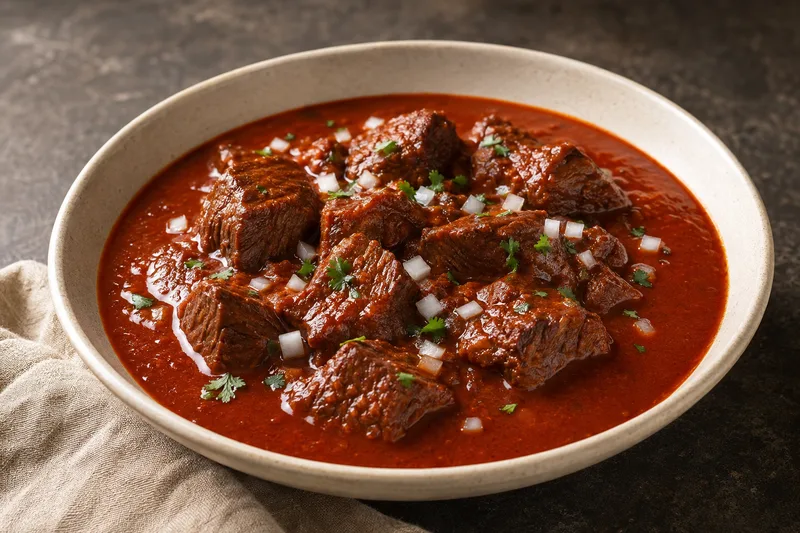
Beef chuck slowly braised in a smooth, brick-red sauce of guajillo and ancho chiles, garlic, cumin and Mexican oregano.
- Prep
- 40 minutes
- Cook
- 2 hours 30 minutes
- Total
- 3 hours 25 minutes
- Yield
- About 10 cups
- Difficulty
- Moderate
Ingredients
Beef
- 3 1/2 pounds boneless beef chuck roast (Trimmed of hard exterior fat and cut into 1 1/2-inch pieces)
- 2 teaspoons kosher salt (Plus more to taste at the end)
- 1 teaspoon coarsely ground black pepper
- 2 tablespoons beef tallow, pork lard or neutral high-heat oil (Divided, plus more if needed for browning)
Colorado Chile Sauce
- 6 dried guajillo chiles (Stemmed and seeded)
- 4 dried ancho chiles (Stemmed and seeded)
- 1 dried chile de árbol (Optional; stemmed, for gentle background heat)
- 1 medium white onion (Cut into large pieces)
- 6 cloves garlic (Peeled and left whole)
- 1 1/2 cups reserved chile-steeping liquid (Taste before using; substitute unsalted beef stock if noticeably bitter)
- 3 cups unsalted beef stock (Divided, plus more if needed during braising)
- 1 teaspoon ground cumin
- 1 teaspoon dried Mexican oregano (Crushed between the palms)
- 2 bay leaves
- kosher salt (To taste)
For Serving
- warm flour tortillas
- Mexican rice and beans (Optional accompaniments)
- diced white onion and chopped cilantro (Optional garnishes)
Instructions
Toast and Steep the Chiles
Heat a large dry skillet over medium heat. Toast the guajillo, ancho and optional árbol chiles for 10–15 seconds per side, pressing them briefly against the skillet, just until fragrant and pliable. Do not blacken or scorch them.
Place the toasted chiles in a heatproof bowl and cover them by several inches with very hot but not vigorously boiling water. Weight them with a small plate and steep for 20–25 minutes, until soft. Do not boil the chiles.
Lift the softened chiles from the bowl. Taste a spoonful of the clear red steeping liquid. Reserve 1 1/2 cups if it tastes earthy and pleasantly chile-forward. If it tastes noticeably bitter, discard it and use 1 1/2 cups unsalted beef stock instead.
Brown the Beef
Heat the oven to 325°F. Pat the beef completely dry and season it evenly with 2 teaspoons kosher salt and the black pepper.
Heat 1 tablespoon tallow, lard or oil in a large Dutch oven over medium-high heat. Brown the beef in three or four uncrowded batches for 6–8 minutes per batch, turning to develop deep color on several sides. Add the remaining fat as needed and transfer the browned beef to a bowl.
Make the Chile Sauce
Reduce the heat beneath the Dutch oven to medium. Add the onion and whole garlic cloves. Cook for 6–8 minutes, stirring and scraping frequently, until softened and browned in patches.
Transfer the cooked onion and garlic to a blender. Add the softened chiles, 1 1/2 cups reserved steeping liquid or replacement stock, 1 cup beef stock, cumin and Mexican oregano. Blend until completely smooth, venting the lid safely if the ingredients are still warm.
Press the blended sauce through a fine-mesh strainer into a bowl, using a flexible spatula to extract as much sauce as possible. Discard the tough skins and solids left behind.
Fry the Colorado Sauce
Reduce the Dutch oven to medium-low. Carefully pour the strained chile sauce into the remaining fat; it may spatter. Scrape all of the browned beef fond from the bottom of the pot.
Cook the sauce for 10–12 minutes, stirring frequently, until it darkens to a rich brick red, becomes glossy and thick, and loses its raw-chile aroma. Do not let it scorch.
Braise the Chile Colorado
Return the beef and accumulated juices to the Dutch oven. Add the remaining 2 cups beef stock and the bay leaves. Stir well; the liquid should nearly cover the beef without turning the dish into soup. Add a little more stock only if needed.
Bring the chile Colorado to a gentle simmer. Cover the Dutch oven, transfer it to the 325°F oven and braise for 90 minutes.
Uncover, stir and continue braising for 30–45 minutes, until the beef yields easily to a fork and the sauce clings to each piece. If the beef is still firm, continue cooking in 15-minute increments. Add warm stock only if the sauce becomes too thick before the beef is tender.
Finish and Serve
Remove and discard the bay leaves. Taste and adjust the kosher salt. If the sauce is thinner than desired, remove the tender beef temporarily and simmer the sauce uncovered until it coats a spoon, then return the beef to the pot.
Let the chile Colorado rest for 15 minutes before serving with warm tortillas and any desired rice, beans, diced onion or cilantro.
Notes
Chile Colorado means chile that is red or colored red; it does not refer to the state of Colorado. This version uses beef chuck in a smooth sauce made from whole dried guajillo and ancho chiles. It contains no tomatoes, commercial chili powder, cinnamon, cloves, vinegar or sugar, keeping it intentionally distinct from the accompanying Asado de Puerco recipe.
The chile-steeping liquid does not automatically need to be discarded. Gently steeped, properly toasted chiles can produce a useful liquid with considerable flavor and color. Vigorous boiling, scorched chile skins, loose seeds and excessive soaking can make that liquid bitter. Taste it before using it: clean, earthy liquid belongs in the blender; unpleasantly bitter liquid does not.
Guajillos provide the characteristic bright brick-red color and a clean, slightly fruity chile flavor. Anchos add darker fruit and body. The optional árbol contributes heat without changing the identity of the sauce.
Frying the strained sauce in the beef fat concentrates the chiles and incorporates the browned fond. The sauce should finish glossy and thick enough to cling to the beef, but it should not resemble flour gravy.
Verify that packaged stock and other ingredients are certified gluten-free when serving someone with a medical gluten restriction.
Substitutions
Dried New Mexico red chiles may replace up to half of the guajillos for a more direct Southwestern red-chile character.
Boneless beef short ribs may replace chuck, although they release more fat and may require skimming.
Pork shoulder may replace beef chuck in equal weight; begin checking it approximately 20 minutes earlier.
Water may replace beef stock when the beef is deeply browned and the chile sauce is properly fried.
For a milder sauce, omit the árbol chile. For more heat, use two or three árbol chiles without increasing the ancho or guajillo quantities.
Variations
Chile Colorado with Potatoes:
Add 1 1/2 pounds Yukon Gold potatoes cut into 1 1/2-inch pieces during the final 40 minutes of braising.
Pork Chile Colorado:
Replace the beef chuck with pork shoulder and begin checking for tenderness after 90 minutes.
New Mexico Red Chile Version:
Replace three guajillos and two anchos with five dried New Mexico red chiles. The sauce will be brighter and more chile-forward.
Stovetop Chile Colorado:
Braise at the barest simmer with the lid slightly ajar, stirring every 20 minutes and adding stock as necessary to prevent scorching.
Storage
Cool promptly in shallow airtight containers and refrigerate within two hours. Store for up to four days. The flavor generally improves after resting overnight.
Freeze for up to three months. Thaw overnight in the refrigerator before reheating. Store tortillas and garnishes separately.
Reheating
Reheat gently in a covered saucepan or Dutch oven over medium-low heat, stirring occasionally, until the beef and sauce reach 165°F. Add unsalted beef stock a few tablespoons at a time if the sauce has become too thick.
Taste after reheating and adjust the salt only after the sauce is fully hot.
Troubleshooting
The steeping liquid tastes bitter:
Do not use it. Blend the softened chiles with unsalted beef stock instead. The recipe treats the steeping liquid as an ingredient to evaluate, not an obligation.
The finished sauce tastes bitter:
The dried chiles may have scorched during toasting or the sauce may have burned while frying. Toast very briefly and stir the frying sauce frequently. Dilution may soften mild bitterness, but badly burned chile cannot be repaired.
The sauce is too hot:
Omit the árbol chile next time. For the current batch, dilute with additional ancho-guajillo sauce or unsalted stock and serve with rice, beans or crema.
The sauce is too thin:
Remove the tender beef and simmer the sauce uncovered until it coats a spoon. Return the beef just long enough to heat through.
The sauce is too thick:
Add warm unsalted beef stock a few tablespoons at a time.
The beef is tough:
Continue braising in 15-minute increments. Chuck that remains tough needs more time, not higher heat.
The sauce tastes flat:
Adjust the salt first. The dish should not require sugar or vinegar when the chiles, browning and seasoning are balanced.
You might also enjoy
Stew
Crawfish Étouffée
A refined Cajun crawfish étouffée with a butter-rich blond roux, tender Louisiana crawfish tails, the classic trinity and a silky, deeply seasoned sauce served over rice.
Stew
Red Wine Beef Stew with Velvety Gravy
Seasoned-flour-dredged beef chuck slowly braised with red wine, caramelized tomato paste, vegetables and herbs in a rich, naturally velvety gravy.
Stew
Southwestern Green Chile Beef Stew
Flour-dredged beef chuck braised with roasted Hatch green chile, Mexican lager, potatoes, carrots and corn in a velvety Southwestern gravy.