
Stew
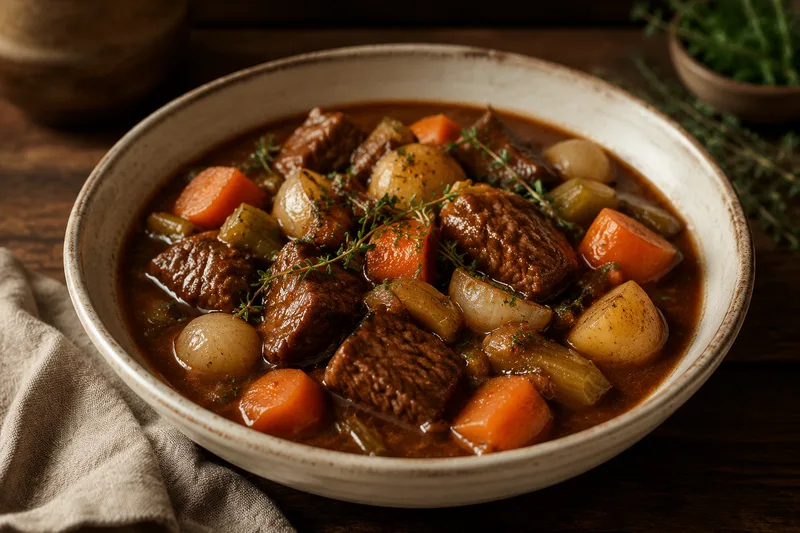
Red Wine Beef Stew with Velvety Gravy
Seasoned-flour-dredged beef chuck slowly braised with red wine, caramelized tomato paste, vegetables and herbs in a rich, naturally velvety gravy.
- Prep
- 35 minutes
- Cook
- 2 hours 45 minutes
- Total
- 3 hours 35 minutes
- Yield
- About 12 cups
- Difficulty
- Moderate
Ingredients
Seasoned Beef
- 3 pounds boneless beef chuck roast (Trimmed of hard exterior fat and cut into 1 1/2-inch pieces)
- 1/3 cup all-purpose flour
- 1 1/2 teaspoons kosher salt
- 1 teaspoon freshly ground black pepper
- 1 teaspoon granulated garlic
- 1 teaspoon onion powder
- 1/2 teaspoon sweet paprika
- 3 tablespoons beef tallow or neutral high-heat oil (Divided, plus more if needed for browning)
Stew Base
- 1 large yellow onion (Diced)
- 1 large carrot (Finely diced)
- 3 celery stalks (Finely diced)
- 4 cloves garlic (Minced)
- 3 tablespoons tomato paste
- 1 1/2 cups dry red wine (Such as Merlot, Cabernet Sauvignon or Côtes du Rhône)
- 4 cups unsalted beef stock (Plus more if needed during braising)
- 1 tablespoon Worcestershire sauce
- 6 fresh thyme sprigs
- 2 bay leaves
Vegetables and Finish
- 1 1/2 pounds Yukon Gold potatoes (Cut into 1 1/2-inch pieces)
- 12 ounces carrots (Peeled and cut into 1 1/2-inch pieces)
- 12 ounces cremini mushrooms (Halved or quartered according to size)
- 8 ounces pearl onions (Peeled fresh or thawed frozen)
- 2 tablespoons unsalted butter (Divided)
- 2 tablespoons flat-leaf parsley (Finely chopped)
- kosher salt and freshly ground black pepper (To taste after the stew has reduced)
Instructions
Dredge and Brown the Beef
Heat the oven to 325°F. Pat the beef pieces thoroughly dry with paper towels. In a large bowl, combine the flour, kosher salt, black pepper, granulated garlic, onion powder and paprika.
Working with one-third of the beef at a time, toss it lightly in the seasoned flour immediately before browning. Shake off all loose excess flour; the meat should have a thin, even coating rather than a heavy breading. Discard the unused dredging flour after all the raw beef has been coated.
Heat 1 tablespoon tallow or oil in a large Dutch oven over medium-high heat. Brown the beef in three or four uncrowded batches, turning to develop a deep crust on several sides, approximately 6–8 minutes per batch. Add additional fat between batches as needed. Transfer each browned batch to a tray.
Control the heat carefully. A dark brown coating on the pot is desirable, but blackened flour tastes bitter. If loose flour begins burning, lower the heat and wipe out only the scorched particles without removing the good brown fond.
Build the Braising Base
Reduce the heat to medium. Add the diced onion, diced carrot and celery to the Dutch oven. Cook for 7–9 minutes, stirring and scraping frequently, until softened and beginning to brown. Add the garlic and cook for 30 seconds.
Add the tomato paste. Cook for 3–4 minutes, stirring constantly and smearing it across the hot surface, until it changes from bright red to dark brick-red, begins sticking lightly to the pot and smells sweet and roasted rather than raw. Do not let it turn black.
Pour in the red wine and scrape the bottom of the pot thoroughly to dissolve the browned flour, beef fond and caramelized tomato paste. Bring to a lively simmer and cook for 7–10 minutes, until reduced by approximately half.
Add the beef stock, Worcestershire sauce, thyme and bay leaves. Return the browned beef and any accumulated juices to the pot. The liquid should nearly cover the beef; add a small amount of additional stock if necessary.
Braise the Stew
Bring the stew to a gentle simmer on the stovetop. Cover the Dutch oven, transfer it to the 325°F oven and braise for 75 minutes.
Remove the pot carefully. Stir in the Yukon Gold potatoes and carrot pieces, submerging them in the liquid. Return the covered pot to the oven for 35–45 minutes, until the vegetables are tender and the beef yields easily when pressed with a fork.
If the beef remains firm, continue braising in 15-minute increments. Chuck becomes tender only after its connective tissue has had enough time to dissolve; increasing the oven temperature will not improve it.
Brown the Mushrooms and Pearl Onions
While the beef braises, melt 1 tablespoon butter in a wide skillet over medium-high heat. Add the mushrooms in a single layer and cook for 7–9 minutes, stirring only occasionally, until their released moisture evaporates and they brown deeply. Transfer them to a bowl.
Melt the remaining 1 tablespoon butter in the skillet. Add the pearl onions and cook for 5–7 minutes, turning occasionally, until lightly browned. Add them to the mushrooms.
Finish the Gravy
When the beef and vegetables are tender, return the Dutch oven to the stovetop. Remove and discard the thyme stems and bay leaves. Fold in the browned mushrooms and pearl onions.
Simmer uncovered over medium-low heat for 10–15 minutes, stirring gently, until the mushrooms and onions are heated through and the gravy coats the back of a spoon. The flour on the beef should provide a velvety texture without cornstarch.
If the gravy is too thick, add warm beef stock a few tablespoons at a time. If it is too thin, continue simmering uncovered. Do not add raw flour directly to the finished stew.
Taste only after the stew has reached its final consistency, then adjust with kosher salt and black pepper. Stir in the parsley and let the stew rest off the heat for 15 minutes before serving.
Notes
The defining technique in this stew is the quick seasoned-flour dredge. It helps the beef develop a flavorful crust and gradually thickens the braising liquid into a velvety gravy. Shake off the excess flour so it browns rather than forming a heavy coating. No cornstarch or packaged gravy is needed.
Caramelizing tomato paste is different from caramelizing onions. Cook it directly against the hot pot until it darkens from bright red to brick-red and develops a sweet, roasted aroma. This removes its raw metallic edge and builds deeper savory flavor. Add the wine before the paste or surrounding fond turns black.
The wine should support the beef rather than dominate it. Reducing 1 1/2 cups by half concentrates its flavor and cooks away the harsh alcohol before the stock is introduced.
Mushrooms and pearl onions are browned separately so they retain their shape and develop flavor instead of becoming pale and waterlogged in the braise.
This stew is even better after an overnight rest, making it well suited to advance preparation.
Substitutions
Boneless short ribs may replace beef chuck, though they are more expensive and may release additional fat. Brisket flat is generally too lean for this preparation.
Merlot, Cabernet Sauvignon, Côtes du Rhône or another dry red wine may be used. Avoid sweet wine and salted cooking wine.
Frozen pearl onions are convenient and work well after thawing and drying. One large yellow onion cut into wedges may replace them, though the presentation will differ.
Baby bella, white button or mixed wild mushrooms may replace cremini mushrooms.
Small red potatoes may replace Yukon Golds. Russets are not recommended because they tend to collapse into the gravy.
For an alcohol-free version, replace the wine with additional unsalted beef stock and add 1 tablespoon balsamic vinegar after deglazing.
Variations
Bourbon Beef Stew:
Replace 1/2 cup of the wine with 1/3 cup bourbon. Reduce it with the remaining wine before adding stock.
Herb-Forward Beef Stew:
Add two rosemary sprigs with the thyme and bay, removing all woody stems before serving.
Root Vegetable Beef Stew:
Replace half the potatoes with parsnips or rutabaga cut into 1 1/2-inch pieces.
Beef and Mushroom Stew:
Increase the mushrooms to 1 1/2 pounds and use a mixture of cremini, shiitake and oyster mushrooms.
Storage
Cool the stew promptly in shallow containers and refrigerate within two hours. Store for up to four days.
Freeze in airtight meal-size containers for up to three months. The potatoes may soften slightly after freezing, but Yukon Golds hold their shape better than russets. Thaw overnight in the refrigerator.
Reheating
Reheat gently in a covered heavy saucepan or Dutch oven over medium-low heat, stirring occasionally, until the beef and gravy reach 165°F. Add a small amount of beef stock if the gravy has thickened during refrigeration.
Avoid rapid boiling, which can break apart the potatoes and cause the flour-thickened gravy to stick to the pot.
Troubleshooting
The gravy tastes like raw flour:
The dredged beef or vegetables were not browned sufficiently. Cook the flour coating until golden and simmer the finished stew long enough for the flour to hydrate fully.
The flour burns while browning:
The heat is too high or too much loose flour remains on the beef. Shake off excess flour, use medium-high heat and add fresh fat between batches.
The tomato paste tastes bitter:
It was taken beyond dark brick-red and burned. Caramelize it while stirring constantly and deglaze as soon as it smells roasted.
The beef is tough:
It needs more time. Continue braising at 325°F in 15-minute increments until it yields easily to a fork.
The gravy is too thick:
Add warm unsalted beef stock a few tablespoons at a time.
The gravy is too thin:
Simmer uncovered after the beef is tender. Do not add raw flour directly to the pot.
The stew is too salty:
Use unsalted stock and season the finished reduction, not the unreduced liquid. Dilute with unsalted stock if needed.
The potatoes fell apart:
They were cut too small, added too early or stirred too aggressively. Use 1 1/2-inch Yukon Gold pieces and fold gently.
You might also enjoy
Stew
Crawfish Étouffée
A refined Cajun crawfish étouffée with a butter-rich blond roux, tender Louisiana crawfish tails, the classic trinity and a silky, deeply seasoned sauce served over rice.
Stew
Southwestern Green Chile Beef Stew
Flour-dredged beef chuck braised with roasted Hatch green chile, Mexican lager, potatoes, carrots and corn in a velvety Southwestern gravy.
Stew
Southern Chicken and Flat Dumplings
Tender pulled chicken and hand-rolled buttermilk dumplings in a rich homemade chicken broth that thickens naturally into a velvety gravy.