
Stew
Crawfish Étouffée
A refined Cajun crawfish étouffée with a butter-rich blond roux, tender Louisiana crawfish tails, the classic trinity and a silky, deeply seasoned sauce served over rice.
- Prep
- 25 minutes
- Cook
- 45 minutes
- Total
- 1 hour 15 minutes
- Yield
- About 4 1/2 cups étouffée, plus rice
- Difficulty
- Moderate
Ingredients
Cajun Rice
- 1 1/2 cups long-grain white rice (Rinsed until the water runs mostly clear)
- 2 1/4 cups water
- 1 tablespoon unsalted butter
- 1/2 teaspoon kosher salt
Seasoning Blend
- 1 teaspoon sweet paprika
- 1/2 teaspoon dried thyme
- 1/2 teaspoon ground white pepper
- 1/4 teaspoon freshly ground black pepper
- 1/8 teaspoon cayenne pepper (Increase to 1/4 teaspoon for a hotter étouffée)
Étouffée
- 1 pound Louisiana crawfish tail meat (Thawed, with the crawfish fat and juices reserved)
- 6 tablespoons unsalted butter (Divided)
- 1/4 cup all-purpose flour
- 1 medium yellow onion (Finely diced, about 1 1/2 cups)
- 1 medium green bell pepper (Finely diced, about 3/4 cup)
- 2 celery stalks (Finely diced, about 1/2 cup)
- 4 cloves garlic (Finely minced)
- 2 tablespoons dry sherry (Optional, but recommended)
- 2 1/2 cups unsalted seafood or shellfish stock (Warmed; use high-quality refrigerated or homemade stock)
- 1 bay leaf
- 1 teaspoon Worcestershire sauce
- 1 teaspoon Louisiana-style hot sauce (Plus more to taste)
- 1 teaspoon kosher salt (Divided, and used to taste depending on the stock and crawfish)
- 2 teaspoons fresh lemon juice
- 4 green onions (Thinly sliced, white and green parts separated)
- 1/4 cup flat-leaf parsley (Finely chopped)
For Serving
- lemon wedges
- Louisiana-style hot sauce
- thinly sliced green onion tops
Instructions
Cook the Rice
Combine the rinsed rice, water, butter and kosher salt in a medium saucepan. Bring to a boil over medium-high heat.
Stir once, reduce the heat to low and cover tightly. Cook for 15 minutes without lifting the lid.
Remove the saucepan from the heat and let the rice rest, covered, for 10 minutes. Fluff gently with a fork and keep warm.
Prepare the Crawfish and Seasoning
Place the crawfish tails and their reserved fat and juices in a bowl. Check carefully for any shell fragments and remove them.
Combine the paprika, thyme, white pepper, black pepper and cayenne in a small bowl. Sprinkle approximately one-third of this seasoning blend over the crawfish and toss gently. Refrigerate while beginning the étouffée.
Build the Étouffée
Melt 4 tablespoons of the butter in a heavy-bottomed Dutch oven or deep sauté pan over medium heat. Whisk in the flour until completely smooth.
Cook the roux for 6–8 minutes, whisking or stirring constantly, until it reaches a warm blond to light peanut-butter color and smells toasted. Do not take it to the dark color used for gumbo.
Add the onion, bell pepper, celery, the white portions of the green onions and 1/2 teaspoon of the kosher salt. The roux may tighten at first. Cook for 8–10 minutes, stirring frequently, until the vegetables are very tender but not browned.
Add the garlic and the remaining seasoning blend. Cook for 45 seconds, stirring constantly, until fragrant.
Add the dry sherry, if using, and scrape the bottom of the pan. Cook for 1–2 minutes, until almost completely reduced.
Slowly add the warm seafood stock, approximately 1/2 cup at a time, whisking after each addition so the sauce remains smooth.
Add the bay leaf, Worcestershire sauce and hot sauce. Bring to a gentle simmer, reduce the heat to medium-low and cook uncovered for 18–20 minutes, stirring occasionally. The sauce should lightly coat the back of a spoon but remain loose enough to flow over rice.
Finish and Serve
Reduce the heat to low. Add the crawfish tails with their fat and juices. Cook gently for 4–5 minutes, stirring occasionally, just until the crawfish is heated through. Do not boil or cook it for an extended time.
Remove the bay leaf. Stir in the lemon juice, parsley, green onion tops and the remaining 2 tablespoons of cold butter. Stir gently until the butter melts and gives the sauce a glossy finish.
Taste before adding the remaining kosher salt. Adjust with salt, hot sauce, lemon juice or a spoonful of warm stock as needed. The finished étouffée should be deeply savory, buttery and gently spicy, with a sauce that clings to the crawfish without becoming pasty.
Spoon warm rice into shallow bowls and ladle the crawfish étouffée around or partly over the rice. Garnish with green onion tops and serve with lemon wedges and hot sauce.
Notes
This is a butter-forward Cajun-style étouffée without canned soup or tomatoes. Its body comes from a carefully cooked blond roux, and its depth comes from crawfish fat, the trinity and a good shellfish stock.
Louisiana crawfish tails are strongly preferred. Imported crawfish tails can have a noticeably different texture and flavor. If using frozen tails, thaw them overnight in the refrigerator and retain the flavorful yellow-orange crawfish fat in the package.
The roux should be blond to light peanut-butter colored. A dark gumbo roux would overpower the delicate sweetness of the crawfish and provide less thickening power.
The finished sauce should nap the back of a spoon. It should not be as thick as gravy and should not spread across the plate like soup.
Substitutions
One pound of peeled and deveined medium shrimp may replace the crawfish. Add raw shrimp during the final 5–7 minutes and cook only until firm and opaque.
A combination of crawfish and lump crabmeat may be used. Fold the crabmeat in during the final two minutes so the pieces remain intact.
Chicken stock may replace seafood stock in an emergency, but the finished dish will have less shellfish depth. Choose unsalted stock and adjust carefully.
If omitting the dry sherry, proceed directly to adding the stock. No replacement is required.
Salted butter may be used, but omit the initial measured salt and season only after the sauce is complete.
Variations
Creole Crawfish Étouffée:
Add 1/2 cup finely diced peeled tomato with the garlic and cook until most of its liquid evaporates.
Crawfish and Shrimp Étouffée:
Use 8 ounces crawfish tails and 8 ounces peeled medium shrimp. Add the shrimp first, then add the crawfish when the shrimp is nearly opaque.
Extra-Spicy Étouffée:
Increase the cayenne to 1/4 teaspoon and add an extra teaspoon of Louisiana-style hot sauce at the end.
Herb-Finished Étouffée:
Add one teaspoon of finely chopped fresh thyme or two teaspoons of fresh parsley immediately before serving.
Storage
Cool leftovers promptly and refrigerate the rice and étouffée in separate shallow airtight containers within two hours. Refrigerate for up to three days.
Freezing is not recommended because previously frozen crawfish tails can become soft or rubbery after another freeze-and-thaw cycle, and the butter sauce may separate.
Reheating
Reheat only the amount needed. Place the étouffée in a saucepan over medium-low heat with one or two tablespoons of seafood stock or water. Stir frequently and heat to 165°F. Avoid prolonged boiling, which can toughen the crawfish and cause the sauce to separate.
Reheat the rice separately with a spoonful of water, covered, until thoroughly hot.
Troubleshooting
The sauce is too thick:
Whisk in warm seafood stock one tablespoon at a time until it flows slowly from a spoon.
The sauce is too thin:
Simmer it gently for several additional minutes before adding the crawfish. Do not add raw flour directly to the finished sauce.
The roux has dark specks or smells burned:
Discard it and begin again. Burned roux cannot be repaired.
The crawfish is rubbery:
It was cooked too long or boiled. Add precooked crawfish only during the final few minutes.
The étouffée tastes flat:
It usually needs salt, acidity or both. Add salt carefully, then finish with a few drops of lemon juice and hot sauce.
The butter separates:
Remove the pan from the heat and stir in a tablespoon of warm stock. Finish with cold butter over low heat rather than boiling.
You might also enjoy
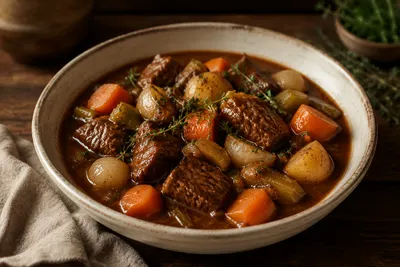
Stew
Red Wine Beef Stew with Velvety Gravy
Seasoned-flour-dredged beef chuck slowly braised with red wine, caramelized tomato paste, vegetables and herbs in a rich, naturally velvety gravy.
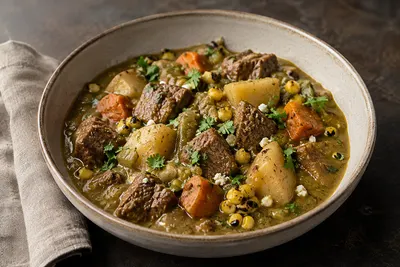
Stew
Southwestern Green Chile Beef Stew
Flour-dredged beef chuck braised with roasted Hatch green chile, Mexican lager, potatoes, carrots and corn in a velvety Southwestern gravy.
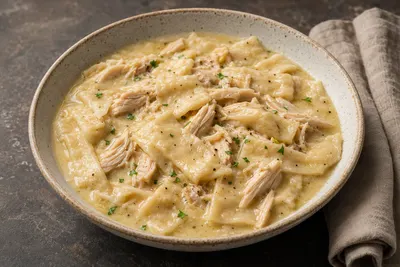
Stew
Southern Chicken and Flat Dumplings
Tender pulled chicken and hand-rolled buttermilk dumplings in a rich homemade chicken broth that thickens naturally into a velvety gravy.