
Stew
Asado de Puerco
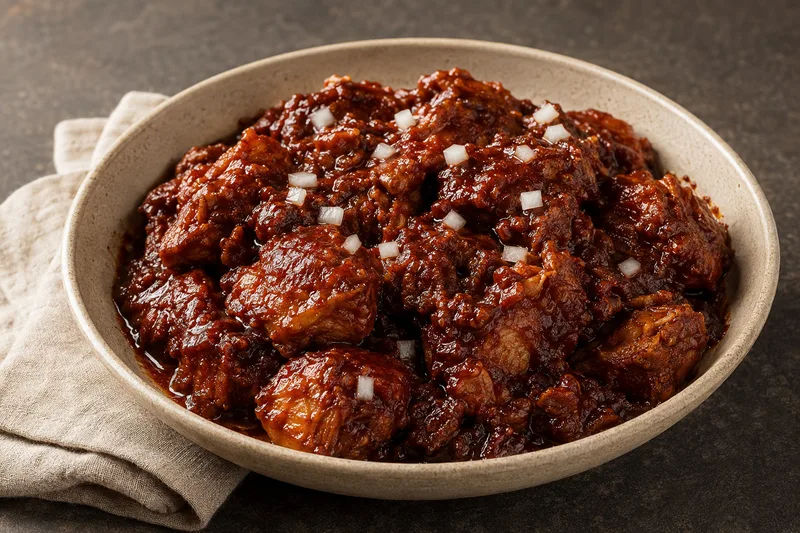
Pork shoulder browned and slowly braised in a glossy, brick-red sauce of ancho, guajillo and árbol chiles, finished with a restrained touch of vinegar.
- Prep
- 40 minutes
- Cook
- 2 hours 15 minutes
- Total
- 3 hours 10 minutes
- Yield
- About 9 cups
- Difficulty
- Moderate
Ingredients
Pork
- 3 1/2 pounds boneless pork shoulder (Trimmed of hard exterior fat and cut into 1 1/2-inch pieces)
- 2 teaspoons kosher salt (Plus more to taste at the end)
- 1 teaspoon coarsely ground black pepper
- 2 tablespoons pork lard or neutral high-heat oil (Divided, plus more if needed for browning)
Red-Chile Sauce
- 6 dried ancho chiles (Stemmed and seeded)
- 6 dried guajillo chiles (Stemmed and seeded)
- 2 dried chiles de árbol (Stemmed; use one for a milder sauce or omit if desired)
- 5 cloves garlic (Peeled and left whole)
- 1/2 medium white onion (Roughly chopped)
- 2 cups unsalted chicken stock (Divided, plus more as needed for the braise)
- 1 1/2 teaspoons ground cumin
- 1 teaspoon dried Mexican oregano (Crushed between the palms)
- 1/4 teaspoon ground cloves (Use a level measure; it should remain a background note)
- 1/4 teaspoon ground cinnamon (Use a level measure; it should remain a background note)
- 1 tablespoon apple cider vinegar (Added at the end)
- 1 teaspoon finely grated piloncillo or dark brown sugar (Optional; add only if the finished chile sauce has a harsh edge)
- kosher salt (To taste)
For Serving
- warm flour tortillas (Recommended for serving)
- Mexican rice and beans (Optional accompaniments)
Instructions
Toast and Soak the Chiles
Heat a large dry skillet over medium heat. Toast the ancho, guajillo and árbol chiles for 10–15 seconds per side, pressing them briefly against the skillet, just until fragrant and pliable. Work in batches if necessary and do not allow the chiles to blacken.
Place the toasted chiles in a heatproof bowl and cover them with very hot water. Weight them with a small plate if necessary and soak for 20–25 minutes, until softened. Drain and discard the soaking water, which may be bitter.
Brown the Pork
Heat the oven to 325°F. Pat the pork completely dry and season it evenly with 2 teaspoons kosher salt and the black pepper.
Heat 1 tablespoon lard or oil in a large Dutch oven over medium-high heat. Brown the pork in three or four uncrowded batches for about 6 minutes per batch, turning to develop deep color on several sides. Add the remaining fat as needed and transfer each browned batch to a bowl.
Make the Red-Chile Sauce
Reduce the heat beneath the Dutch oven to medium. Add the chopped onion and whole garlic cloves. Cook for about 5 minutes, stirring and scraping frequently, until the onion softens and develops a little color.
Transfer the cooked onion and garlic to a blender. Add the drained chiles, 1 1/2 cups chicken stock, cumin, Mexican oregano, cloves and cinnamon. Blend until completely smooth, venting the blender safely if the ingredients are still warm.
Press the blended sauce through a fine-mesh strainer into a bowl, using a flexible spatula to extract as much sauce as possible. Discard the dry skins and solids left in the strainer.
Fry the Sauce
Reduce the Dutch oven to medium-low. Carefully pour the strained chile sauce into the remaining pork fat; it may spatter. Scrape up all of the browned pork fond from the bottom of the pot.
Cook the sauce for 10–12 minutes, stirring frequently, until it changes from bright red to deep brick-red, becomes glossy and thick, and loses its raw-chile aroma. Do not rush this step or allow the sauce to scorch.
Braise the Asado
Return the pork and accumulated juices to the Dutch oven. Add the remaining 1/2 cup chicken stock and stir well. Add additional stock only as needed so the sauce nearly covers the pork without becoming soupy.
Bring the asado to a gentle simmer. Cover the Dutch oven, transfer it to the 325°F oven and braise for 75 minutes.
Uncover, stir and continue braising for 30–45 minutes, until the pork yields easily to a fork and the glossy sauce clings to each piece. If the pork is still firm, continue cooking in 15-minute increments. Add a small amount of warm stock if the sauce becomes too thick before the pork is tender.
Finish and Serve
Stir in the apple cider vinegar and taste the sauce. Add the optional piloncillo or brown sugar only if the dried chiles have left a harsh or bitter edge; the asado should remain savory rather than sweet.
Adjust the kosher salt and let the asado rest for 15 minutes. Serve hot with warm flour tortillas and, if desired, Mexican rice and beans.
Notes
In West Texas and parts of northern Mexico, this dish is often called simply asado. The more descriptive title Asado de Puerco distinguishes the red-chile pork braise from grilled carne asada. Family versions vary considerably; this one contains no tomatoes and builds its sauce from whole dried chiles.
Ancho chiles contribute dark fruit and earthy depth, guajillos provide brighter red-chile flavor and color, and chiles de árbol supply clean heat. Toast them only until fragrant. Blackened dried chiles can make the entire sauce irreparably bitter.
The cinnamon and cloves are deliberately limited to 1/4 teaspoon each. They should not be individually identifiable; they supply a subtle warm background beneath the dried chiles and pork. Measure them level the first time before deciding whether either belongs in your personal version.
Frying the strained sauce in the pork fat is a defining step. It concentrates the chiles, incorporates the browned fond and changes the sauce from raw and bright to dark, glossy and deeply savory.
The vinegar is a finishing seasoning, not a dominant flavor. It should sharpen the chile and pork after their long braise without making the asado taste sour. Verify that stock and other packaged ingredients are certified gluten-free when serving someone with a medical gluten restriction.
Substitutions
Use all ancho and guajillo chiles for a mild asado, or replace the árbol chiles with a dried pequín chile according to local preference.
Boneless country-style pork ribs cut from the shoulder may replace pork shoulder. Avoid lean pork loin, which will dry out before the sauce develops.
Unsalted pork stock or water may replace chicken stock. If using water, the browned pork and properly fried sauce become especially important.
White vinegar may replace apple cider vinegar, but begin with 2 teaspoons and add more only after tasting.
Dark brown sugar may replace piloncillo. It is optional and should be used only to round off harsh chiles, not to sweeten the dish.
Variations
Hotter Asado:
Use three or four chiles de árbol, retaining some seeds. Taste the sauce before the braise because heat will become more integrated but will not disappear.
Asado with Orange:
Replace half of the finishing vinegar with fresh orange juice for a softer, fruitier finish. This is a variation rather than part of the base recipe.
Rustic Asado:
Skip straining the sauce for a coarser family-style texture. Blend very thoroughly because guajillo skins can remain leathery.
Stovetop Asado:
Braise at the barest simmer with the lid slightly ajar, stirring every 20 minutes and adding stock as necessary to prevent scorching.
Storage
Cool promptly in shallow airtight containers and refrigerate within two hours. Store for up to four days. The chile flavor usually becomes even more integrated overnight.
Freeze for up to three months. Thaw overnight in the refrigerator before reheating. Store tortillas and other accompaniments separately.
Reheating
Reheat gently in a covered saucepan or Dutch oven over medium-low heat, stirring occasionally, until the pork and sauce reach 165°F. Add unsalted chicken stock a few tablespoons at a time if the sauce has become too thick.
Taste after reheating and refresh with a few drops of apple cider vinegar only if the sauce needs brightness.
Troubleshooting
The sauce tastes bitter:
The dried chiles may have blackened during toasting, or the sauce may have scorched while frying. Toast briefly over medium heat and stir the frying sauce frequently. A very small amount of piloncillo may soften a minor bitter edge, but it cannot repair badly burned chiles.
The sauce tastes strongly of cinnamon or cloves:
The spices were overmeasured. Dilute with additional unsalted chile sauce or stock. Both spices should remain in the background.
The sauce is too hot:
Use fewer chiles de árbol next time. For the current batch, dilute with additional ancho-guajillo sauce and stock. Serve with beans, rice or crema rather than adding sugar.
The sauce is too thin:
Remove the tender pork and simmer the sauce uncovered until it becomes glossy and coats a spoon. Return the pork just long enough to reheat it.
The sauce is too thick:
Add warm unsalted chicken stock a few tablespoons at a time.
The pork is tough:
Continue braising in 15-minute increments. Pork shoulder that remains tough needs more time, not higher heat.
The sauce tastes flat:
First adjust the salt, then add apple cider vinegar a few drops at a time. Acidity cannot compensate for insufficient salt.
You might also enjoy
Stew
Crawfish Étouffée
A refined Cajun crawfish étouffée with a butter-rich blond roux, tender Louisiana crawfish tails, the classic trinity and a silky, deeply seasoned sauce served over rice.

Stew
Red Wine Beef Stew with Velvety Gravy
Seasoned-flour-dredged beef chuck slowly braised with red wine, caramelized tomato paste, vegetables and herbs in a rich, naturally velvety gravy.

Stew
Southwestern Green Chile Beef Stew
Flour-dredged beef chuck braised with roasted Hatch green chile, Mexican lager, potatoes, carrots and corn in a velvety Southwestern gravy.