
Stew
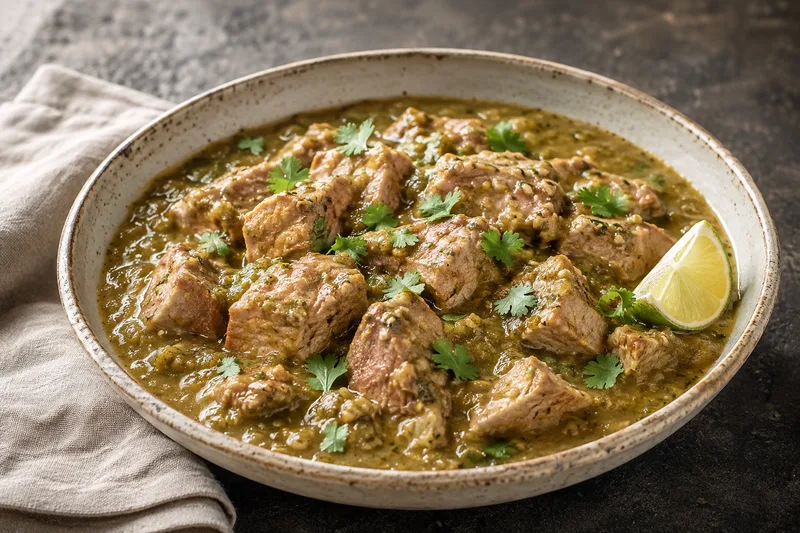
Pork Chile Verde with Roasted Tomatillos
Pork shoulder braised until tender in a deeply roasted sauce of tomatillos, poblano peppers, green chiles, jalapeño, cilantro and lime.
- Prep
- 40 minutes
- Cook
- 2 hours 30 minutes
- Total
- 3 hours 25 minutes
- Yield
- About 10 cups
- Difficulty
- Moderate
Ingredients
Pork
- 3 1/2 pounds boneless pork shoulder (Trimmed of hard exterior fat and cut into 1 1/2-inch pieces)
- 2 teaspoons kosher salt (Plus more to taste at the end)
- 1 teaspoon freshly ground black pepper
- 2 tablespoons neutral high-heat oil or pork lard (Divided, plus more if needed)
Roasted Verde Sauce
- 2 pounds tomatillos (Husks removed, rinsed well and dried)
- 3 poblano peppers
- 3 Anaheim or Hatch green chiles
- 2 jalapeño peppers (Use one for milder chile verde)
- 1 large white onion (Peeled and quartered through the root)
- 6 cloves garlic (Left unpeeled for roasting)
- 1 cup fresh cilantro leaves and tender stems (Loosely packed)
- 1 cup unsalted chicken stock (For blending)
Braise and Finish
- 1 teaspoon ground cumin
- 1 teaspoon dried Mexican oregano (Crushed between the palms)
- 2 cups unsalted chicken stock (Plus more if needed during braising)
- 2 bay leaves
- 1 tablespoon fresh lime juice (Plus more to taste)
- 1/4 cup fresh cilantro (Chopped)
- kosher salt and freshly ground black pepper (To taste)
Optional for Serving
- warm corn or flour tortillas
- diced avocado or Mexican crema
- lime wedges and chopped cilantro
Instructions
Roast the Vegetables
Position an oven rack 6–8 inches below the broiler and heat the broiler. Line two rimmed sheet pans with foil. Arrange the tomatillos, poblanos, Anaheim or Hatch chiles, jalapeños, onion quarters and unpeeled garlic in a single layer.
Broil the vegetables, turning them as needed, until the peppers are blistered and blackened in patches, the tomatillos have collapsed and begun to brown, and the onion is charred at its edges, about 12–18 minutes total. Remove the garlic as soon as it is softened so it does not burn. Preserve all tomatillo juices on the pans.
Place the roasted peppers in a covered bowl for 10 minutes. Pull away only loose, papery skin from the larger peppers; a little char adds flavor. Stem the peppers and remove seeds and membranes according to the heat desired. Peel the roasted garlic.
Blend the Verde Sauce
Working in batches if necessary, blend the roasted tomatillos and their juices, peppers, onion, garlic, 1 cup cilantro and 1 cup chicken stock. Leave the sauce slightly textured rather than perfectly smooth. Use caution when blending warm ingredients.
Brown the Pork
Heat the oven to 325°F. Pat the pork dry and season it evenly with 2 teaspoons kosher salt and 1 teaspoon black pepper.
Heat 1 tablespoon oil or lard in a large Dutch oven over medium-high heat. Brown the pork in three or four uncrowded batches, about 6 minutes per batch, turning to develop a dark crust on several sides. Add the remaining fat as needed and transfer the browned pork to a tray.
Cook the Sauce and Braise
Reduce the heat to medium. Add the cumin and Mexican oregano to the fat in the Dutch oven and stir for about 30 seconds, just until fragrant.
Carefully pour in the blended verde sauce. Scrape all browned fond from the bottom of the pot. Simmer the sauce uncovered for 10–12 minutes, stirring frequently, until it darkens slightly, thickens and loses its raw tomatillo edge.
Return the pork and accumulated juices to the pot. Add 2 cups chicken stock and the bay leaves. The liquid should come nearly to the top of the pork without completely submerging it; add a little more stock only if needed.
Bring the chile verde to a gentle simmer, cover the Dutch oven and transfer it to the 325°F oven. Braise for 90 minutes.
Uncover and continue braising for 30–45 minutes, stirring once or twice, until the pork is fork-tender and the sauce coats a spoon. If the pork is still firm, continue in 15-minute increments. Add warm stock only if the sauce threatens to scorch.
Finish and Serve
Remove and discard the bay leaves. Skim excess fat from the surface if desired. Stir in the lime juice and chopped cilantro. Taste and adjust with salt, black pepper and additional lime juice.
Let the chile verde rest for 15 minutes before serving. Serve with warm tortillas and any desired avocado, crema, lime wedges or cilantro.
Notes
Chile verde is not one single fixed dish. New Mexican and some border-style versions rely primarily on roasted green chile and may contain no tomatillos. This version is intentionally a tomatillo-based pork chile verde: the tomatillos provide tartness, pectin and body, while the mix of poblano, Anaheim or Hatch chile and jalapeño gives the sauce layers of green-chile flavor.
Pork shoulder is ideal because its fat and collagen keep the meat succulent through a long braise. The finished sauce should be a muted olive green rather than bright green; roasting and braising naturally deepen its color.
Cooking the blended sauce by itself before adding the braising liquid is important. It concentrates the roasted vegetables, softens the raw acidity of the tomatillos and lets the sauce cling to the pork without flour or cornstarch.
Green chiles vary enormously in heat. Taste a small piece of each roasted pepper before blending, and control the heat by adjusting the jalapeños and the amount of seeds and membranes retained. Verify that packaged stock and other ingredients are certified gluten-free when serving someone with a medical gluten restriction.
Substitutions
Beef chuck may replace the pork shoulder in equal weight. Cut it into 1 1/2-inch pieces and expect it to require 15–30 minutes of additional braising.
Two 15-ounce cans of whole tomatillos may replace fresh tomatillos. Drain them, reserve the liquid and skip roasting the tomatillos; roast the peppers, onion and garlic as written. The flavor will be softer and less fresh.
Any combination of Hatch, Anaheim and poblano peppers may be used according to availability. Poblanos contribute deeper flavor, while Anaheim and Hatch chiles provide a more direct green-chile character.
Serrano peppers may replace jalapeños for a sharper, hotter version.
Unsalted pork stock may replace chicken stock. Parsley can replace cilantro for those who dislike it, although the result will have a different character.
Variations
Green-Chile-Only Version:
For a version closer to New Mexican green chile, omit the tomatillos and use about 4 cups total roasted, peeled green chile. Add stock gradually because the sauce will have less natural pectin and body.
Beef Chile Verde:
Replace the pork shoulder with beef chuck and braise until completely tender, usually 15–30 minutes longer.
Potato Chile Verde:
Add 1 1/2 pounds of Yukon Gold potatoes cut into 1 1/2-inch pieces during the final 40 minutes of braising.
Extra-Hot Chile Verde:
Replace one jalapeño with a serrano and retain some seeds. Taste the roasted peppers before blending.
Storage
Cool promptly in shallow airtight containers and refrigerate within two hours. Store for up to four days. Keep tortillas, crema, avocado and fresh garnishes separate.
Freeze the chile verde for up to three months. Thaw overnight in the refrigerator before reheating.
Reheating
Reheat gently in a covered saucepan or Dutch oven over medium-low heat, stirring occasionally, until the pork and sauce reach 165°F. Add unsalted chicken stock a few tablespoons at a time if the sauce has become too thick.
Refresh with a squeeze of lime and a little chopped cilantro immediately before serving.
Troubleshooting
The sauce is too tart:
Simmer it uncovered a little longer before adjusting anything else. If needed, add chicken stock and a small pinch of salt. Avoid adding sugar unless the tomatillos are exceptionally sharp.
The sauce is too thin:
Remove the tender pork temporarily and simmer the sauce uncovered until it coats a spoon. Tomatillo pectin should thicken it without flour or cornstarch.
The sauce is too thick:
Add warm unsalted chicken stock a few tablespoons at a time.
The chile verde is too hot:
Dilute with additional sauce or stock and serve with crema and avocado. Removing heat after blending is difficult, so taste the roasted peppers first.
The sauce tastes bitter:
A pepper skin, garlic clove or spice may have burned. Charred patches are desirable, but fully carbonized ingredients should be discarded.
The pork is tough:
Continue braising in 15-minute increments. Pork shoulder that is still tough generally needs more time, not higher heat.
The sauce is greasy:
Let the pot stand for several minutes and skim the fat from the surface. Do not remove every trace; some pork fat carries the chile flavor.
You might also enjoy
Stew
Crawfish Étouffée
A refined Cajun crawfish étouffée with a butter-rich blond roux, tender Louisiana crawfish tails, the classic trinity and a silky, deeply seasoned sauce served over rice.
Stew
Red Wine Beef Stew with Velvety Gravy
Seasoned-flour-dredged beef chuck slowly braised with red wine, caramelized tomato paste, vegetables and herbs in a rich, naturally velvety gravy.
Stew
Southwestern Green Chile Beef Stew
Flour-dredged beef chuck braised with roasted Hatch green chile, Mexican lager, potatoes, carrots and corn in a velvety Southwestern gravy.