
Soup
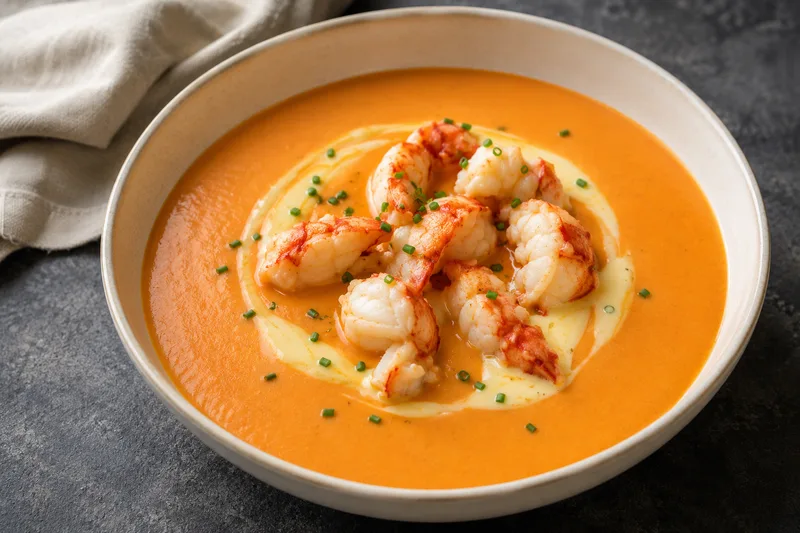
Lobster Bisque with Saffron Cream
A luxurious, silky lobster bisque made with roasted lobster shells, brandy, white wine and cream, finished with butter-warmed lobster and saffron cream.
- Prep
- 40 minutes
- Cook
- 1 hour 45 minutes
- Total
- 2 hours 40 minutes
- Yield
- About 7 cups
- Difficulty
- Advanced
Ingredients
Lobster
- 3 live Maine lobsters (Approximately 1 1/4 to 1 1/2 pounds each)
- 1 tablespoon kosher salt (For the steaming water)
Lobster Stock
- 2 tablespoons neutral oil (Avocado, grapeseed or canola)
- reserved lobster shells and bodies (Broken into manageable pieces)
- 1 yellow onion (Roughly chopped)
- 1 carrot (Roughly chopped)
- 1 celery stalk (Roughly chopped)
- 2 tablespoons tomato paste
- 1/3 cup brandy or Cognac (Remove the pot from the heat before adding)
- 1 cup dry white wine (Sauvignon Blanc or Pinot Grigio)
- 6 cups cold water
- 4 sprigs fresh thyme
- 2 fresh parsley stems
- 1 bay leaf
- 1 teaspoon black peppercorns
Bisque
- 3 tablespoons unsalted butter
- 2 large shallots (Finely chopped)
- 2 cloves garlic (Minced)
- 1/4 cup uncooked white rice (Rinsed)
- 1/2 cup canned crushed tomatoes
- 5 cups prepared lobster stock (From the Lobster Stock section)
- 1/4 teaspoon saffron threads (Lightly crushed)
- 1/8 teaspoon cayenne pepper (Optional, but recommended)
- 1 cup heavy cream
- 1 teaspoon fresh lemon juice (Add more only if needed)
- 1 1/2 teaspoons kosher salt (Begin with less if the stock is salted)
- 1/4 teaspoon ground white pepper (Or to taste)
Butter-Warmed Lobster
- reserved lobster meat (Cut into bite-size pieces)
- 2 tablespoons unsalted butter
- 2 tablespoons lobster stock (Or water)
Saffron Cream
- 1/2 cup cold heavy cream
- 1 pinch saffron threads (Approximately 1/16 teaspoon)
- 1 tablespoon hot water (For blooming the saffron)
- 1 pinch kosher salt
Garnish
- 2 tablespoons fresh chives (Finely sliced)
- small lobster pieces (Reserved from the butter-warmed lobster)
Instructions
Cook and Prepare the Lobsters
Place a steaming rack in a large covered stockpot and add approximately 2 inches of water and the kosher salt. Bring the water to a vigorous boil.
Working carefully, place the lobsters in the pot, cover and steam for approximately 9–11 minutes, depending on their size. The shells should be bright red and the meat should be firm, pearly and opaque.
Transfer the lobsters to a rimmed tray and let them cool for approximately 15 minutes, or until they can be handled safely.
Remove the tail, claw and knuckle meat. Refrigerate the meat while preparing the bisque. Reserve all shells and bodies, but discard the feathery gills, stomach sac and intestinal tract.
Make the Lobster Stock
Heat the neutral oil in a large Dutch oven or heavy stockpot over medium-high heat. Add the lobster shells and cook for 8–10 minutes, stirring and pressing them against the pot until fragrant and beginning to brown.
Add the onion, carrot and celery. Cook for 6–8 minutes, stirring occasionally, until the vegetables begin to soften and brown.
Add the tomato paste and cook for approximately 2 minutes, stirring constantly, until it darkens slightly and coats the shells and vegetables.
Remove the pot from the heat before adding the brandy. Never pour alcohol directly from the bottle near an open flame. Return the pot to medium heat and cook until the brandy has reduced by approximately half.
Add the white wine and scrape the bottom of the pot to release the browned bits. Simmer until the wine has reduced by approximately half.
Add the cold water, thyme, parsley stems, bay leaf and peppercorns. Bring to a gentle simmer. Cook uncovered for 45 minutes, occasionally pressing the shells beneath the liquid. Do not boil aggressively because that can make the stock cloudy or bitter.
Strain the stock through a fine-mesh strainer, pressing gently on the solids. Discard the solids. Measure 5 cups of stock. If you have more than 5 cups, simmer it until reduced; if you have slightly less, add enough water to reach 5 cups.
Make the Bisque
Melt the butter in a clean Dutch oven over medium heat. Add the shallots and cook for 4–5 minutes until softened without browning.
Add the garlic and cook for 30 seconds. Add the rinsed rice and crushed tomatoes and cook for another minute.
Add the lobster stock, saffron and cayenne. Bring to a gentle simmer and cook uncovered for 25–30 minutes, until the rice is completely tender.
Blend the soup until exceptionally smooth using a countertop blender or immersion blender. If using a countertop blender, work in batches, vent the lid and take precautions with the hot liquid.
Pass the blended bisque through a fine-mesh strainer into a clean pot, pressing it through with the back of a ladle. Discard any coarse material remaining in the strainer.
Stir in the heavy cream and warm the bisque over medium-low heat. Do not allow it to boil hard. Add the lemon juice, salt and white pepper. Taste and adjust carefully; the bisque should be rich, balanced and distinctly lobster-forward.
Prepare the Saffron Cream
Combine the saffron and hot water in a small bowl. Let it bloom for 10 minutes, then cool completely.
Whip the cold cream and salt to soft peaks. Gently fold in the cooled saffron liquid. Refrigerate until serving.
Warm the Lobster
Melt the butter with the lobster stock in a small skillet over low heat.
Add the lobster meat and warm gently for 2–3 minutes. Avoid frying or boiling the lobster. Reserve several attractive pieces for garnish.
Serve
Divide the hot bisque among six warmed bowls.
Place butter-warmed lobster in the center of each bowl. Add a small spoonful of saffron cream and garnish with chives and a reserved piece of lobster. Serve immediately.
Notes
This recipe uses white rice instead of flour to thicken the bisque. Once blended and strained, the rice creates a silky body without making the soup pasty or noticeably starchy.
The quality of the stock determines the quality of the bisque. Take time to brown the shells, cook the tomato paste and reduce both the brandy and wine.
For the smoothest restaurant-style result, blend the bisque thoroughly and pass it through a fine-mesh strainer.
The finished bisque should coat a spoon lightly. It should not be as thick as gravy or potato soup.
Cook the lobster until the flesh is firm, pearly and opaque.
Substitutions
Four to five shell-on lobster tails, approximately 5–6 ounces each, may replace the whole lobsters. Use the tail shells to flavor the stock and supplement with low-sodium seafood stock as needed. The result will be slightly less intense because whole lobster bodies provide more flavor.
Cognac may replace brandy.
Dry sherry may replace the brandy, although it will give the bisque a slightly different flavor.
If avoiding alcohol, replace the brandy and wine with additional seafood stock and add another teaspoon of lemon juice at the end, as needed.
Half-and-half may replace the heavy cream, but the bisque will be lighter and slightly thinner.
Variations
Tarragon Lobster Bisque:
Add one teaspoon of finely chopped fresh tarragon when the cream is added.
Spicy Lobster Bisque:
Increase the cayenne to 1/4 teaspoon or finish each serving with a few drops of high-quality chili oil.
Crab and Lobster Bisque:
Replace one-third of the lobster meat with lump crabmeat and fold it into the soup immediately before serving.
Smoked Lobster Bisque:
Add only a small pinch of smoked paprika with the saffron. Use restraint so the smoke does not overpower the lobster.
Storage
For the best result, store the bisque, lobster meat and saffron cream separately.
Transfer the bisque to shallow containers and refrigerate within two hours. Store refrigerated for up to three days. Store the lobster meat in a separate airtight container for up to three days. Use the saffron cream within one day.
The bisque base may be frozen before adding the heavy cream for up to two months. Thaw it overnight in the refrigerator, reheat and then add fresh cream. Freezing the finished cream-based bisque is not recommended because it may separate.
Reheating
Reheat only the amount needed.
Place the bisque in a saucepan over medium-low heat and whisk frequently until it reaches 165°F. If it becomes too thick, add lobster stock, seafood stock or water one tablespoon at a time.
Warm the lobster separately in a little butter and add it immediately before serving. Do not repeatedly heat and cool the lobster meat.
Troubleshooting
The bisque is too thin:
Simmer it gently before adding the cream until it reaches the desired consistency.
The bisque is too thick:
Whisk in lobster stock or water a few tablespoons at a time.
The texture is grainy:
Blend longer and pass the bisque through a finer strainer. The rice must be completely tender before blending.
The bisque tastes bitter:
The shells, garlic or tomato paste may have burned, or the stock may have boiled too aggressively.
The cream separated:
The bisque became too hot after the cream was added. Blend it briefly with an immersion blender. A tablespoon or two of fresh cream may help restore the texture.
The lobster is rubbery:
It was overheated. Warm cooked lobster gently and only immediately before serving.
The lobster flavor is weak:
Reduce the strained stock before making the bisque. Do not try to compensate with excessive salt.
You might also enjoy

Soup
Loaded Baked Potato Soup
A refined loaded baked potato soup with oven-baked russets, bacon, leek, cheddar, sour cream and chives—rich and creamy without becoming heavy or gluey.

Soup
Classic French Onion Soup
Deeply caramelized onions in a rich beef broth with white wine and dry sherry, finished beneath toasted baguette and a bubbling Gruyère crust.

Soup
Roasted Tomato and Red Pepper Bisque
A silky vegetarian bisque of deeply roasted tomatoes, sweet red peppers, onion and garlic, enriched with dry sherry, cream and butter.