
Sauce
Classic Argentine Chimichurri
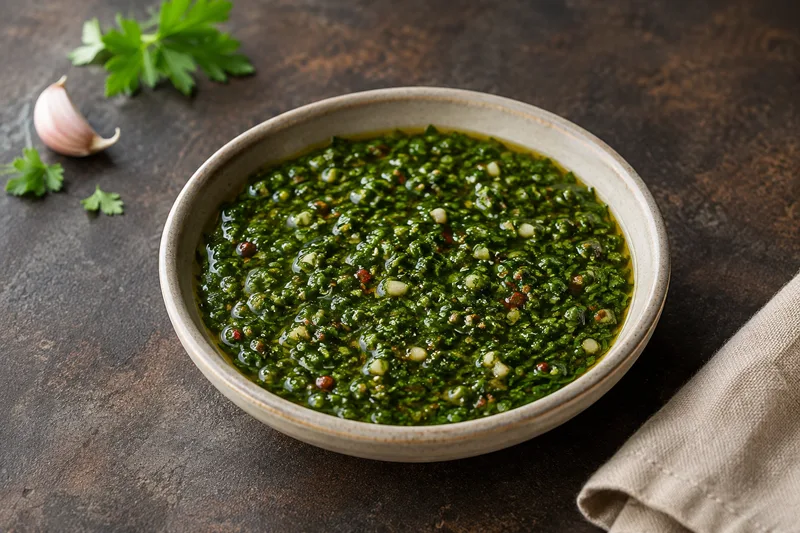
A bright, rustic Argentine herb sauce made with hand-chopped parsley, oregano, garlic, red-wine vinegar, olive oil and crushed red pepper.
- Prep
- 15 minutes
- Cook
- 0 minutes
- Total
- 45 minutes
- Yield
- About 1 cup
- Difficulty
- Easy
Ingredients
Chimichurri
- 1 cup flat-leaf parsley leaves and tender stems (Packed, thoroughly dried and finely chopped by hand)
- 2 tablespoons fresh oregano leaves (Finely chopped; or substitute 2 teaspoons dried oregano)
- 4 cloves garlic (Very finely minced or grated)
- 1/2 teaspoon crushed red pepper flakes (Increase to 1 teaspoon for a hotter sauce)
- 1 teaspoon kosher salt (Plus more to taste)
- 1/2 teaspoon freshly ground black pepper
- 2 tablespoons warm water (Helps dissolve the salt and soften the dried chile)
- 1/4 cup red-wine vinegar (Plus more to taste if needed)
- 1/2 cup extra-virgin olive oil (Choose a fruity oil without aggressive bitterness)
Instructions
Prepare the Herbs
Wash the parsley and oregano, then dry them thoroughly in a salad spinner or between clean kitchen towels. Excess water dilutes the sauce and shortens its storage life.
Finely chop the parsley and oregano by hand with a sharp knife. The herbs should remain visibly textured rather than becoming a smooth green paste.
Mince or grate the garlic very finely so its flavor distributes evenly through the sauce.
Mix and Rest the Chimichurri
In a medium nonreactive bowl, combine the garlic, crushed red pepper, kosher salt, black pepper and warm water. Stir until most of the salt dissolves, then let the mixture stand for 5 minutes to soften the chile flakes and raw garlic.
Stir in the red-wine vinegar, chopped parsley and oregano. Let the herb-and-vinegar mixture stand for another 5 minutes before adding the oil.
Pour in the olive oil and stir gently until combined. Do not whisk aggressively; chimichurri should remain a loose, spoonable mixture of herbs suspended in oil and vinegar rather than a fully emulsified dressing.
Cover and let the chimichurri rest at room temperature for 30 minutes before tasting. For more developed flavor, refrigerate it for 2–4 hours, then return it to room temperature before serving.
Taste and adjust with kosher salt, red-wine vinegar or olive oil. The finished sauce should taste bright and garlicky with enough acidity to cut through grilled meat, but it should not be sharply sour or oily.
Serve
Stir well immediately before serving because the vinegar and herb solids naturally settle beneath the oil.
Spoon chimichurri over sliced grilled steak, chicken, pork, fish or roasted vegetables. Begin with 1–2 tablespoons per serving and add more at the table.
If using chimichurri as a marinade, place the marinade portion in a separate container before it contacts raw meat. Discard any sauce that has touched raw meat; reserve fresh uncontaminated chimichurri for serving.
Notes
Classic Argentine chimichurri is a rustic parsley-and-oregano sauce rather than a smooth purée. Hand chopping preserves the individual herb pieces and prevents the olive oil from becoming bitter through aggressive processing. A food processor is unnecessary and can quickly turn the mixture into green paste.
This version does not contain cilantro. Cilantro appears in many modern and regional variations, but parsley is the defining herb in the classic Argentine-style sauce presented here.
Adding the vinegar before the olive oil allows the salt to dissolve and begins seasoning the herbs directly. Once oil coats the herbs, they absorb the vinegar less readily.
The resting period is important. Freshly mixed chimichurri can taste harshly garlicky and disconnected; after 30 minutes, the garlic, chile, vinegar and herbs begin tasting like one sauce.
Chimichurri is traditionally associated with grilled beef, but it is equally useful with chicken, pork, grilled shrimp, roasted potatoes, beans and charred vegetables.
Substitutions
Two teaspoons dried oregano may replace the fresh oregano. Let it hydrate in the warm water and vinegar for 10 minutes before adding the parsley and oil.
White-wine vinegar may replace red-wine vinegar for a lighter flavor. Sherry vinegar may be used for a deeper, nuttier variation.
A neutral oil may replace up to half of the extra-virgin olive oil if the available olive oil is very bitter.
One small fresh red chile may replace the crushed red pepper flakes. Remove the seeds for less heat and mince it extremely finely.
Curly parsley may be used when flat-leaf parsley is unavailable, but it must be chopped very finely because its texture is coarser.
Variations
Cilantro Chimichurri:
Replace half of the parsley with cilantro leaves and tender stems. This is a modern variation rather than the classic Argentine profile.
Spicy Chimichurri:
Increase the crushed red pepper to 1 teaspoon and add one finely minced Fresno or serrano chile.
Smoky Chimichurri:
Add 1/2 teaspoon smoked paprika with the red pepper flakes.
Mint Chimichurri for Lamb:
Replace 1/4 cup of the parsley with fresh mint and use sherry vinegar in place of red-wine vinegar.
Chimichurri Rojo:
Add 1 tablespoon sweet paprika and 1 teaspoon tomato paste to create a redder, deeper variation.
Storage
Because the sauce contains fresh garlic and herbs in oil, refrigerate it promptly after the initial 30-minute rest. Store in a clean airtight glass jar for up to five days.
The olive oil may become cloudy or firm in the refrigerator. This is normal. Let the sauce stand at room temperature for 20–30 minutes and stir thoroughly before serving.
Freezing is not recommended because the parsley loses its fresh texture and color.
Reheating
Chimichurri is served at room temperature and should not be heated. Remove it from the refrigerator 20–30 minutes before serving so the olive oil liquefies, then stir well.
If serving it with hot meat, spoon the room-temperature sauce over the meat immediately before serving rather than warming the sauce separately.
Troubleshooting
The chimichurri tastes too sharp:
Add olive oil 1 tablespoon at a time and allow the sauce to rest another 15 minutes.
The chimichurri tastes too oily:
Add red-wine vinegar 1 teaspoon at a time along with a small pinch of salt. Stir and taste after each addition.
The garlic is overpowering:
Allow more resting time or add additional parsley, vinegar and oil in the original proportions. Use smaller garlic cloves in the next batch.
The sauce is bitter:
The parsley may have included too many tough stems, the olive oil may be aggressively bitter or a food processor may have overworked the oil and herbs. Use tender stems only and chop by hand.
The sauce is watery:
The herbs were not dried thoroughly. Stir in additional finely chopped dry parsley and a proportional amount of seasoning.
The herbs turned dark:
The sauce may be old, warm or exposed to too much air. Refrigerate promptly in a small jar with minimal headspace.
The sauce tastes flat:
It usually needs salt or vinegar rather than more garlic. Add a small pinch of salt, rest briefly and reassess before adding acidity.
You might also enjoy
Sauce
Cognac Peppercorn Cream Sauce
A luxurious French-style steak sauce with cracked peppercorns, Cognac, reduced beef stock and cream, finished with Dijon mustard and cold butter for a silky restaurant-quality texture.
Sauce
Ancho Beef Jus Reduction
A competition-style beef jus reduction with ancho chile, roasted aromatics, tomato paste and a glossy butter finish, developed to complement ribeye and other richly flavored beef cuts.

Sauce
Charred Corn and Poblano Purée
A silky Southwestern purée sauce made with deeply charred sweet corn, roasted poblano, shallot, cream, ancho chile and fresh lime, developed to accompany fire-kissed ribeye.