Sauce
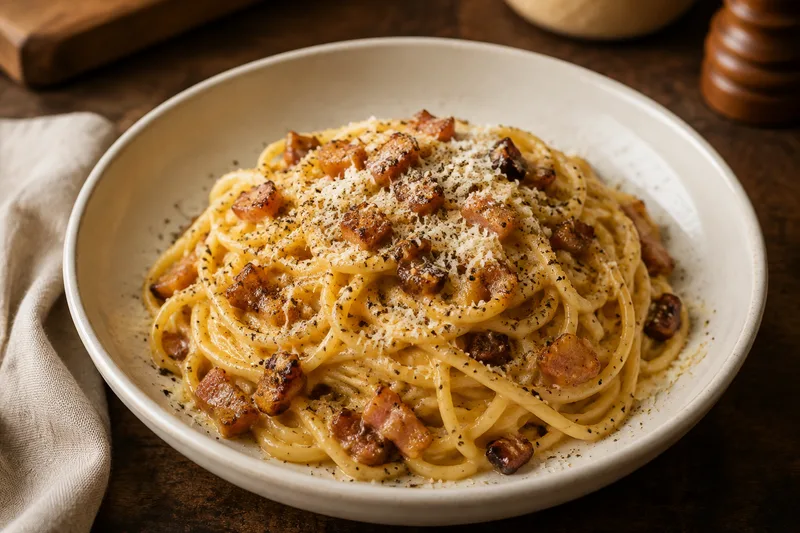
Roman-Style Carbonara with Cured Pork Jowl
A silky Roman-style carbonara made without cream, using cured pork jowl, eggs, Pecorino Romano, black pepper and starchy pasta water to create the sauce.
- Prep
- 15 minutes
- Cook
- 20 minutes
- Total
- 35 minutes
- Yield
- 4 generous or 6 moderate servings
- Difficulty
- Moderate
Ingredients
Carbonara
- 6 ounces guanciale or cured pork jowl (Preferably unsmoked; remove any tough rind and cut into 1/4-inch batons)
- 4 large egg yolks (At room temperature)
- 2 large whole eggs (At room temperature)
- 4 ounces Pecorino Romano cheese (Finely grated, about 1 1/4 cups, plus more for serving)
- 1 1/2 teaspoons coarsely ground black pepper (Plus more for serving)
- 1 pound spaghetti, rigatoni or bucatini (Spaghetti is the classic choice)
- 4 quarts water (For cooking the pasta)
- 2 teaspoons kosher salt (For the pasta water; reduce if the cured jowl is exceptionally salty)
Instructions
Prepare the Jowl and Egg Mixture
Place the cured pork jowl in a large, cool skillet, then set the skillet over medium-low heat. Cook for 8–12 minutes, stirring occasionally, until the fat has rendered and the meat is golden with crisp edges. Avoid high heat, which can scorch the cured meat before its fat renders.
Remove the skillet from the heat. Transfer approximately one-third of the browned jowl to a small plate for garnishing. Leave the remaining jowl and rendered fat in the skillet.
In a medium bowl, whisk together the egg yolks, whole eggs, finely grated Pecorino Romano and black pepper. The mixture will be very thick. Whisk in approximately 2 tablespoons of the warm rendered jowl fat to begin tempering the eggs and loosen the mixture.
Cook the Pasta
Bring 4 quarts of water to a boil in a large pot. Add the kosher salt. The water should be seasoned more lightly than for most pasta because the cured pork jowl and Pecorino Romano are both salty.
Add the pasta and cook until approximately 1 minute short of al dente according to the package directions. Before draining, reserve at least 2 cups of the starchy pasta water.
Drain the pasta without rinsing it. Immediately transfer it to the skillet containing the rendered jowl fat.
Emulsify the Carbonara
Add 1/2 cup reserved pasta water to the skillet. Place it over medium heat and toss the pasta continuously for approximately 30 seconds so the starch and rendered fat begin to emulsify.
Remove the skillet completely from the heat and let it stand for 45–60 seconds. This brief cooling period lowers the pan temperature enough to reduce the risk of scrambling the eggs.
Pour the egg-and-cheese mixture over the pasta while tossing continuously with tongs. Add warm reserved pasta water 1–2 tablespoons at a time until the sauce becomes smooth, glossy and fluid enough to coat every strand.
If the sauce remains too loose, place the skillet over the lowest possible heat for only 5–10 seconds while tossing constantly, then remove it again. Repeat only if necessary. Residual heat should thicken the sauce without forming visible pieces of cooked egg.
Serve immediately in warmed bowls. Top with the reserved crisp pork jowl, additional Pecorino Romano and freshly ground black pepper. The carbonara will continue to thicken as it stands, so it should be slightly looser in the skillet than desired on the plate.
Notes
Traditional Roman carbonara is made with guanciale, which is salt-cured, seasoned and generally unsmoked pork jowl. Because true guanciale can be difficult to find, this version uses cured pork jowl, an ingredient that is more readily available in many parts of the United States.
If both unsmoked and smoked cured pork jowl are available, choose unsmoked for the closest approximation to guanciale. Smoked jowl will still produce a delicious carbonara, but its stronger smoke flavor makes the dish less traditional. Taste a cooked piece before deciding how much salt to use in the pasta water.
Carbonara does not contain cream. Its creamy appearance comes from the emulsion of eggs, finely grated Pecorino, rendered pork fat and starchy pasta water. The pasta water is an ingredient, not merely a cooking by-product.
Carbonara is listed as a sauce, but it cannot be prepared successfully as an independent sauce and held for later use. It must be emulsified directly with hot pasta and served immediately.
Use very fresh eggs. Pasteurized shell eggs may be used when serving anyone at increased risk from undercooked eggs.
Substitutions
Guanciale is the traditional and preferred choice when available. Use the same quantity as cured pork jowl.
Unsmoked pancetta may replace cured pork jowl in equal measure. Bacon can be used, but its pronounced smoke changes the character of the dish and makes it distinctly nontraditional.
For a slightly milder sauce, replace 1 ounce of the Pecorino Romano with finely grated Parmigiano-Reggiano.
Rigatoni and bucatini are excellent alternatives to spaghetti. Rigatoni captures pieces of cured jowl inside the tubes.
Pasteurized whole eggs and yolks may be used without changing the method.
Variations
Smoked Jowl Carbonara:
Use 4–5 ounces smoked cured pork jowl and season the pasta water very lightly. Expect a distinctly smoky American variation.
Pecorino-Parmigiano Carbonara:
Use 3 ounces Pecorino Romano and 1 ounce Parmigiano-Reggiano for a rounder, less sharply salty cheese flavor.
Extra-Pepper Carbonara:
Toast 2 teaspoons coarsely ground black pepper in the rendered jowl fat for 20 seconds before adding the pasta. Keep the heat moderate so the pepper does not burn.
Rigatoni Carbonara:
Use one pound rigatoni and finish with slightly more pasta water because the tubular pasta carries a heavier coating of sauce.
Storage
Carbonara is best eaten immediately and does not store particularly well because the egg-and-cheese emulsion tightens as it cools.
If necessary, cool leftovers promptly and refrigerate them in a shallow airtight container within two hours. Use within three days. Do not freeze.
Reheating
For the best texture, place the leftover pasta in a skillet over low heat with 1–2 tablespoons of water. Toss gently and remove it from the heat as soon as it is warmed through.
Avoid the microwave when possible because concentrated heat can scramble the egg sauce and make the pork rubbery. The reheated sauce will not be as silky as freshly made carbonara.
Troubleshooting
The eggs scrambled:
The skillet or pasta was too hot when the egg mixture was added. Remove the skillet from the heat and let it cool for 45–60 seconds before combining. Add the eggs while tossing continuously.
The sauce is too thick or sticky:
Add warm reserved pasta water 1 tablespoon at a time while tossing vigorously. Carbonara should be slightly loose when it leaves the skillet.
The sauce is watery:
Continue tossing off the heat. If necessary, place the skillet over the lowest heat for only a few seconds at a time. Finely grated cheese and sufficiently starchy pasta water are essential.
The cheese clumped:
The Pecorino was grated too coarsely or the pan was too hot. Use a fine grater and incorporate the egg mixture off the heat.
The dish is too salty:
The cured jowl and Pecorino provided more salt than expected. Use less salt in the pasta water next time and avoid adding any salt directly to the sauce.
The jowl is tough rather than crisp:
It was cooked too quickly. Begin it in a cool skillet over medium-low heat so the fat renders before the exterior becomes dark.
The carbonara tastes overwhelmingly smoky:
Use unsmoked cured pork jowl if available. If only smoked jowl is available, reduce it to 4–5 ounces or combine it with unsmoked pancetta.
You might also enjoy
Sauce
Cognac Peppercorn Cream Sauce
A luxurious French-style steak sauce with cracked peppercorns, Cognac, reduced beef stock and cream, finished with Dijon mustard and cold butter for a silky restaurant-quality texture.
Sauce
Ancho Beef Jus Reduction
A competition-style beef jus reduction with ancho chile, roasted aromatics, tomato paste and a glossy butter finish, developed to complement ribeye and other richly flavored beef cuts.

Sauce
Charred Corn and Poblano Purée
A silky Southwestern purée sauce made with deeply charred sweet corn, roasted poblano, shallot, cream, ancho chile and fresh lime, developed to accompany fire-kissed ribeye.