Sauce
Chunky Beef, Sausage and Mushroom Spaghetti Sauce
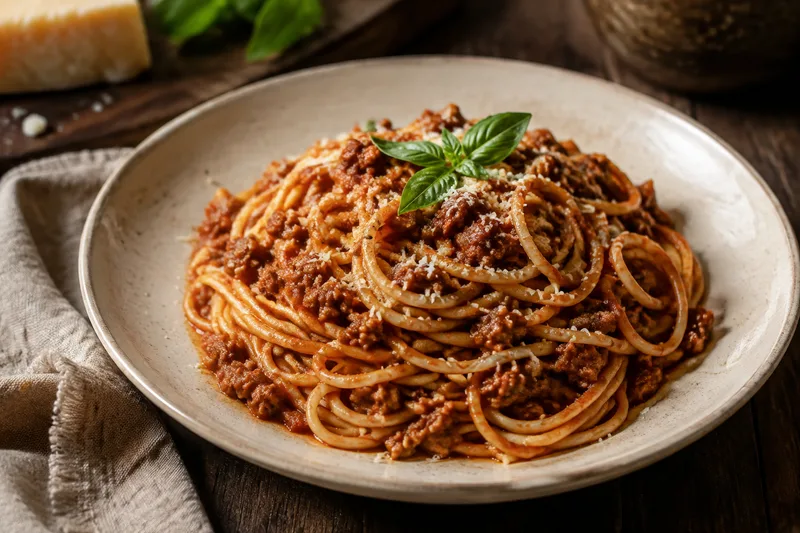
A hearty, chunky spaghetti sauce refined over more than 35 years, with ground beef, hot Italian sausage, mushrooms, Merlot and plenty of petite-diced tomatoes.
- Prep
- 20 minutes
- Cook
- 2 hours
- Total
- 2 hours 30 minutes
- Yield
- About 10 to 12 cups
- Difficulty
- Easy
Ingredients
Meat and Vegetables
- 1 pound ground beef
- 1 pound hot Italian sausage (Bulk sausage or links with the casings removed)
- 1 medium yellow onion (Chopped)
- 4 cloves garlic (Minced)
- 1 pound mushrooms (Cleaned and sliced)
Tomato and Seasoning Base
- 1/2 cup Merlot (Use a dry Merlot suitable for drinking)
- 2 cans petite-diced tomatoes (28 ounces each, with their juices)
- 1 can tomato sauce (16 ounces)
- 1 can tomato paste (6 ounces)
- 2 tablespoons Italian seasoning blend (Divided, with more or less used to taste)
- 2 bay leaves
- 1 teaspoon Worcestershire sauce
- 1 teaspoon freshly ground black pepper (Plus more to taste if desired)
- 2 tablespoons unsalted butter (Optional, for testing as a finishing ingredient)
Instructions
Brown the Meat and Mushrooms
Heat a large heavy-bottomed Dutch oven or stockpot over medium-high heat. Add the ground beef and hot Italian sausage. Break the meat into bite-size crumbles and cook until well browned and no pink remains, approximately 8–10 minutes.
Transfer the browned meat to a bowl with a slotted spoon. Leave approximately 2 tablespoons of rendered fat in the pot and remove any excess.
Add the sliced mushrooms to the hot pot. Cook over medium-high heat for 8–10 minutes, stirring only occasionally, until they release their moisture and develop good brown color. Transfer the mushrooms to the bowl with the meat.
Build the Sauce
Reduce the heat to medium. Add the chopped onion to the pot and cook for 5–7 minutes, stirring occasionally, until softened and beginning to turn golden.
Add the minced garlic and cook for 30–45 seconds, stirring constantly, until fragrant. Do not allow the garlic to brown.
Add the tomato paste and 1 tablespoon of the Italian seasoning. Cook for 2–3 minutes, stirring and scraping the bottom of the pot, until the paste darkens slightly and begins to caramelize.
Pour in the Merlot and scrape up the browned bits from the bottom of the pot. Simmer for 2–3 minutes, until the wine has reduced substantially and no longer smells strongly of alcohol.
Add both cans of petite-diced tomatoes with their juices, the tomato sauce, Worcestershire sauce, black pepper, bay leaves, browned beef and sausage, and browned mushrooms. Stir thoroughly to combine.
Simmer and Finish
Bring the sauce to a gentle simmer, then reduce the heat to low. Cook partially covered for 1 1/2 to 2 hours, stirring every 15–20 minutes and scraping the bottom of the pot so the thick sauce does not scorch. Leave the lid slightly ajar so excess moisture can escape.
After approximately 1 hour, stir in some or all of the remaining 1 tablespoon Italian seasoning according to taste. Continue simmering until the tomato flavor is developed and the sauce is thick while the petite-diced tomatoes remain visibly chunky.
Remove and discard the bay leaves. If testing the optional butter finish, remove the pot from the heat and stir in the butter until completely melted and incorporated. Compare the flavor before and after adding it to decide whether it belongs in the permanent version of the recipe.
Taste and adjust only with additional black pepper or Italian seasoning if needed. This long-established recipe does not use added salt; the hot Italian sausage, canned tomatoes, tomato sauce and Worcestershire provide its seasoning.
Let the sauce rest off the heat for 10 minutes before serving over spaghetti or another sturdy pasta.
Notes
This is a personal spaghetti sauce that has been made and gradually refined for more than 35 years. Its defining characteristics are the combination of ground beef and hot Italian sausage, a full pound of mushrooms and a deliberately chunky tomato texture from two large cans of petite-diced tomatoes.
No salt is added to this recipe. The Italian sausage, canned tomato products and Worcestershire sauce provide sufficient seasoning after the sauce has reduced. Taste the finished sauce before making any adjustment.
The original amount of Merlot is 1/3 cup. It contributes background depth without making wine a dominant flavor. Reduce it before adding the tomatoes so the finished sauce does not taste alcoholic.
The bay leaves, Worcestershire sauce and 1 teaspoon black pepper are additions to the evolving recipe. The butter finish is intentionally marked optional until it has been tested and judged against the familiar version.
Browning the mushrooms separately prevents them from watering down the meat and gives the sauce a deeper savory flavor. The finished sauce should remain unmistakably chunky rather than becoming a smooth marinara.
Substitutions
Mild Italian sausage may replace hot Italian sausage for a less spicy sauce. Add crushed red pepper separately if some heat is still desired.
Cremini, white button or baby bella mushrooms all work well. A mixture may also be used.
Cabernet Sauvignon, Chianti or another dry red wine may replace Merlot. Avoid sweet cooking wine.
Regular diced tomatoes may replace petite-diced tomatoes, although the pieces will be larger. Do not substitute crushed tomatoes if preserving the traditional chunky character is important.
For a leaner sauce, use lean ground beef and drain the rendered fat thoroughly before browning the mushrooms.
The optional butter may be omitted to preserve the familiar long-standing version.
Variations
Extra-Spicy Spaghetti Sauce:
Use extra-hot Italian sausage or add 1/2 teaspoon crushed red pepper with the garlic.
Mushroom-Forward Sauce:
Increase the mushrooms to 1 1/2 pounds and brown them in multiple batches for deeper caramelization.
Slow-Cooker Finish:
Complete all browning and wine-reduction steps on the stovetop, then transfer everything to a slow cooker and cook on low for 4–6 hours with the lid slightly vented during the final hour if the sauce needs to thicken.
Baked Pasta Sauce:
Use the finished sauce in baked ziti or lasagna. Its chunky texture and high meat content hold up well during baking.
Storage
Cool the sauce promptly and transfer it to shallow airtight containers within two hours. Refrigerate for up to four days.
Freeze in meal-size airtight containers for up to three months, leaving room for expansion. For the best flavor, thaw overnight in the refrigerator before reheating.
Reheating
Reheat only the amount needed in a covered saucepan over medium-low heat, stirring frequently, until it reaches 165°F. If the sauce has become too thick, add a small amount of water or unsalted tomato sauce.
Frozen sauce should be thawed overnight in the refrigerator when possible. It may also be reheated gently from frozen in a covered saucepan, beginning over low heat and stirring as the outside softens.
Troubleshooting
The sauce is watery:
Simmer it uncovered or with the lid farther ajar until the excess moisture evaporates. Brown the mushrooms fully before adding them to the sauce.
The sauce is too thick:
Stir in a small amount of water or unsalted tomato sauce until the desired consistency is restored.
The bottom is scorching:
The heat is too high or the sauce is not being stirred often enough. Move it immediately to a clean pot without scraping up the scorched layer.
The wine flavor is harsh:
The Merlot was not reduced long enough before the tomatoes were added. Simmer the wine until its raw alcohol aroma fades.
The Italian seasoning tastes dusty or bitter:
Add the seasoning in two stages rather than using all 2 tablespoons at the beginning. Long cooking can dull or intensify different herbs in the blend.
The sauce tastes too acidic:
Allow it to simmer longer first. The optional butter finish can round the acidity without making the sauce sweet.
The sauce seems underseasoned:
Because this recipe intentionally contains no added salt, first confirm that the sausage is hot Italian sausage and that the sauce has reduced sufficiently. Adjust with black pepper, Italian seasoning or a small additional amount of Worcestershire rather than automatically adding salt.
You might also enjoy

Sauce
Cognac Peppercorn Cream Sauce
A luxurious French-style steak sauce with cracked peppercorns, Cognac, reduced beef stock and cream, finished with Dijon mustard and cold butter for a silky restaurant-quality texture.
Sauce
Ancho Beef Jus Reduction
A competition-style beef jus reduction with ancho chile, roasted aromatics, tomato paste and a glossy butter finish, developed to complement ribeye and other richly flavored beef cuts.

Sauce
Charred Corn and Poblano Purée
A silky Southwestern purée sauce made with deeply charred sweet corn, roasted poblano, shallot, cream, ancho chile and fresh lime, developed to accompany fire-kissed ribeye.